

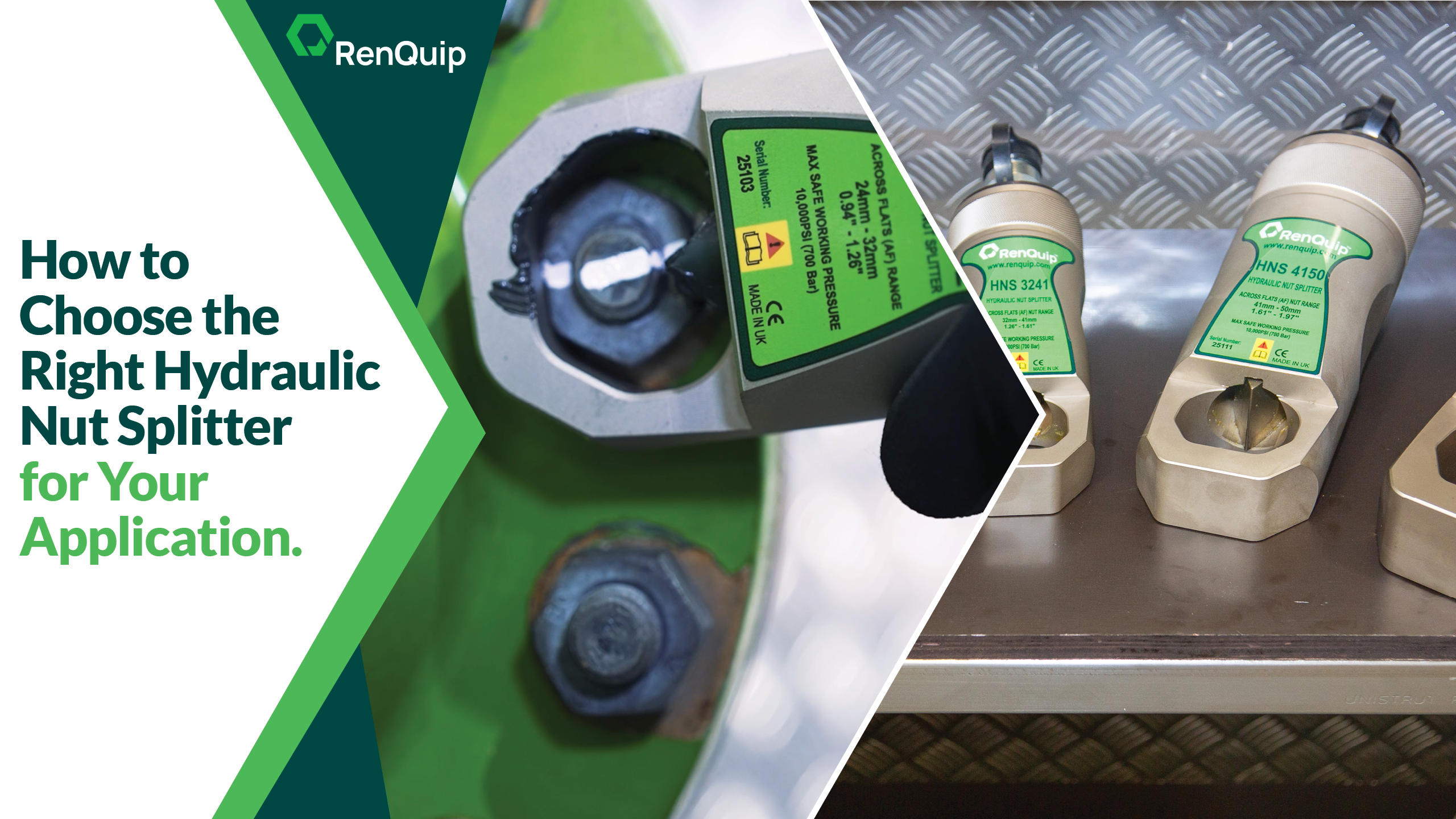
When Nuts refuse to move due to high break out torque load, corrosion or damage, the temptation is often to reach for heat, grinders or impact tools. While these methods may eventually get the job done, they also introduce unnecessary risks to personnel, surrounding equipment and critical assets. Hydraulic nut splitters offer a faster, safer and more controlled solution.
By applying a concentrated force through the blade directly to the nut, they split it cleanly without damaging the surrounding flange.
But with several sizes and designs available, how do you choose the right hydraulic nut splitter?
1. Match the tool to the nut size
The first consideration is the size of the nut you’ll be removing.
Hydraulic nut splitters are designed to cover specific range of across-flats (AF) dimensions, ensuring the applied cutting force is sufficient and keeping the tool as small as possible.
The RenQuip HNS range of 6 tools covers nuts from 19mm (0.71”) to 75mm (2.95”) AF, allowing engineers to select the correct tool for each application rather than compromising with an oversized solution.
Selecting the correct size is critical for ensuring the tool has the correct stroke, sufficient blade width and generates the correct force for successful nut removal.
2. Consider accessibility around the nut
Not every fastener is easy to reach.
Pipework, structural steelwork and equipment often leave very little clearance around a nut, making conventional removal methods difficult or impossible.
The RenQuip HNS range features an angled head design, allowing the cutting blade to access nuts that protrude through large surfaces, thick flanges or sit close to adjacent surfaces. This makes the tools particularly effective in confined maintenance environments where access is limited.
3. Ensure the tool provides sufficient cutting force
Larger nuts require greater cutting force.
Rather than relying on impact or repeated mechanical force, hydraulic nut splitters generate controlled linear force to fracture the nut safely.
The RenQuip HNS range delivers cutting capacities from 10 tonnes up to 90 tonnes, depending on the model, enabling operators to tackle a wide variety of industrial fasteners with confidence.
All tools operate at a maximum working pressure of 700 bar (10,000 PSI) using single-acting spring return hydraulics.
4. Think about the hydraulic power source
A hydraulic nut splitter is only as effective as the pump driving it.
Using a compatible hydraulic pump ensures the tool reaches its designed operating pressure while providing smooth, controlled cutting action.
The RenQuip HNS range is designed to operate with compatible 700 bar hydraulic hand pumps, making it suitable for maintenance teams requiring a portable solution both on-site and offshore.
It is critical that all components in the hydraulic system are rated to 700 Bar (10,000 PSI).
5. Don’t overlook maintenance and consumables
Like any hydraulic tool, regular inspection and routine maintenance help maximise service life.
Before each cut, operators should ensure the cutting blade is correctly centred and perpendicular to the nut face. Heavily greasing the blade reduces wear and helps maintain cutting performance over repeated use.
RenQuip also supplies replacement cutting blades across the full HNS range, allowing tools to remain in service without the need to replace the complete unit.
Why use a hydraulic nut splitter?
Hydraulic nut splitters are particularly valuable where:
• Corrosion has seized fasteners in place.
• Heat cannot be used because of fire or explosion risks.
• Cutting discs or grinders could damage surrounding equipment.
• Bolts need to be preserved for inspection or replacement.
• Downtime needs to be minimised during shutdowns and maintenance campaigns.
By removing damaged nuts quickly and safely, hydraulic nut splitters help reduce maintenance time while lowering the risks associated with traditional removal methods.
Choosing the right solution
Selecting the correct hydraulic nut splitter comes down to five key considerations:
• Nut size
• Accessibility around the fastener
• Compatible hydraulic power source
• Long-term maintenance and replacement parts
The RenQuip HNS Hydraulic Nut Splitter range has been engineered to address each of these requirements, providing a reliable solution for maintenance teams working across Oil & Gas, Renewable Energy, Heavy Industry and Construction.
Whether you’re carrying out planned maintenance or responding to an unexpected equipment failure, choosing the correct hydraulic nut splitter helps improve safety, reduce downtime and keep projects moving.
 RenQuip